




Patellofemoral pain syndrome
Reasons
Valgus (X-shaped) leg curvature.
Thigh muscle weakness or imbalance.
Improper foot position (e.g., flat feet or flat-valgus setting).
Excessive strain on the knees when playing sports.
Prolonged sitting posture.
Frequent joint microtraumas.
Abnormalities such as joint hypermobility.
Symptoms
Discomfort when squatting, going up or down stairs.
Crunching or crepitation in the joint when moving.
Locking or stiffness in the knee.
Patellar swelling or soreness.
Weakness or hypertrophy of the quadriceps femoris muscle.
Consequences
Chondromalacia patellae - damage and thinning of the cartilage covering the articular surfaces.
Chronic pain and impaired mobility.
Degeneration of malposition of the patella and its structures, development of arthrosis.
Treatment
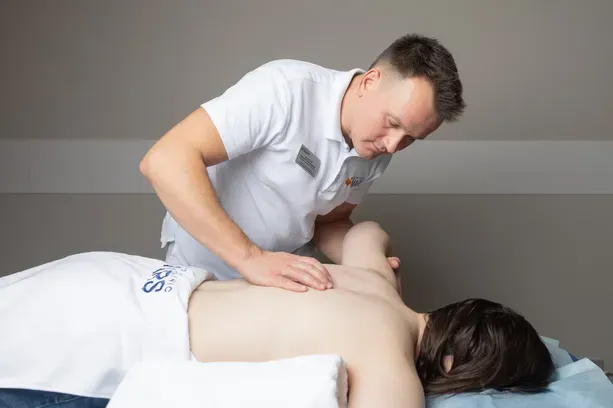
Nonsurgical treatment
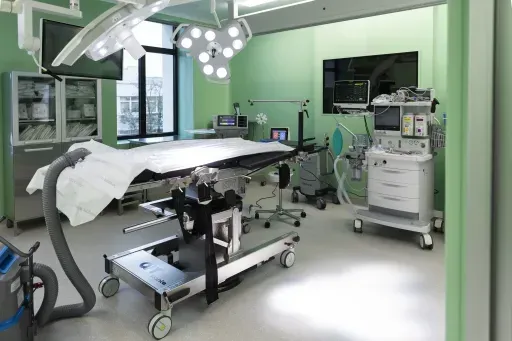
Surgical treatment
How to reach


- Route from exit 4 of the «Belorusskaya» metro station
- Route from exit 2 of the «Belorusskaya» metro station
How to get
From the Belorusskaya metro station of the Zamoskvoretskaya line - exit 4 After exiting the subway, walk through the pedestrian tunnel and climb the stairs. Move towards the railway tracks, go down the stairs immediately after them and walk along the house, then turn right onto 1st Yamskoye Pole Street. At the turn to 3rd Yamsky Pole Street, cross the road at the pedestrian crossing and continue along 1st Yamsky Field Street, after a few buildings on the left you will see Olympus Clinic MARS.
Travel time
9 minutes
Landmark
Olympus Clinic MARS sign
How to get
From the Belorusskaya metro station of the Ring line - exit 2. After exiting the subway, turn left and walk to the pedestrian crossing. Cross the road through two pedestrian crossings and move along the Tverskoy overpass. Go down the stairs immediately after the railway tracks, walk along the house, then turn right onto 1st Yamskoye Pole Street. At the turn to 3rd Yamsky Pole Street, cross the road at the pedestrian crossing and continue along 1st Yamsky Field Street, after a few buildings on the left you will see Olympus Clinic MARS
Travel time
11 minutes
Landmark
Olympus Clinic MARS sign
Parking lot map
Exit 3 from the metro and 640 meters straight ahead, the clinic will be on the right. Landmark - sign Olymp Clinic